

Cardiac catheterization and angioplasty are closely related terms, which is why patients sometimes assume they mean the same thing. They do not.
Cardiac catheterization is a broader procedure used to evaluate or treat certain heart conditions. Angioplasty is a specific interventional treatment that can be performed using catheter-based techniques.
What Is Cardiac Catheterization?
During cardiac catheterization, a thin flexible tube called a catheter is introduced through a blood vessel and guided toward the heart.
Depending on why the procedure is being performed, cardiac catheterization can help clinicians assess heart function, measure pressures, evaluate coronary arteries or perform certain treatments.
One common use is coronary angiography.
Contrast material is introduced through the catheter so that coronary arteries become visible on X-ray imaging. This allows doctors to identify areas of narrowing or blockage.
What Is Angioplasty?
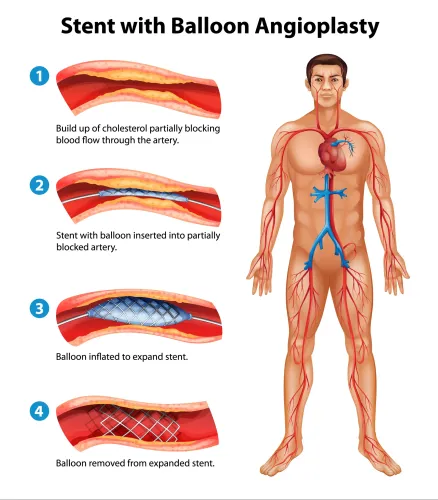
Angioplasty is performed to open a narrowed or blocked coronary artery.
A catheter carrying a small balloon is guided to the affected area. The balloon is expanded, helping widen the artery. A stent is often inserted to help maintain blood flow through the treated segment.
In other words:
Cardiac catheterization can be diagnostic or therapeutic.
Coronary angiography uses catheterization to visualize coronary arteries.
Angioplasty or PCI uses catheter-based treatment to open an artery.
Stent placement commonly accompanies angioplasty to help keep the artery open.
Does an Angiogram Always Lead to Angioplasty?
No.
An angiogram may show that a patient's coronary arteries do not require intervention. In other situations, it may identify narrowing that can be managed with medication and lifestyle changes.
When severe or clinically important disease is identified, angioplasty, stenting or bypass surgery may be considered depending on the findings.
Why an Interventional Cardiologist May Be Involved
An interventional cardiologist is trained in catheter-based procedures used to diagnose and treat cardiovascular conditions.
For patients in Nashik who are being evaluated for coronary artery disease, Dr Sheetalkumar Hiran at Nine Pearl Hospital provides interventional cardiology care, including assessment where catheter-based investigation or treatment may be considered.
Patients should understand why a catheterization procedure is being recommended and whether its primary purpose is diagnosis, treatment or potentially both.
Questions about preparation, medications, contrast exposure, bleeding risk, recovery and follow-up should also be discussed beforehand.
Understanding the terminology can make the treatment process less confusing. Cardiac catheterization provides access to the heart and coronary circulation, while angioplasty is one of the important treatments that can be performed through that access when clinically appropriate.