

Treatment starts by confirming that leg symptoms come from narrowed leg arteries rather than varicose veins, deep-vein thrombosis, nerves, joints or another cause. You will learn how clinicians test circulation, when walking and medicines are enough, when leg artery treatment is needed, and how to choose and prepare for care in Nashik.
Key takeaways
- Seek emergency care for sudden leg pain, numbness, coldness, or loss of pulse.
- Walking pain often needs ankle-brachial index testing and an artery assessment.
- Stop smoking, exercise safely, and control diabetes, blood pressure, and cholesterol.
- Angioplasty or bypass depends on blockage location, length, symptoms, and overall health.
Which leg symptoms need a PAD assessment or emergency care?
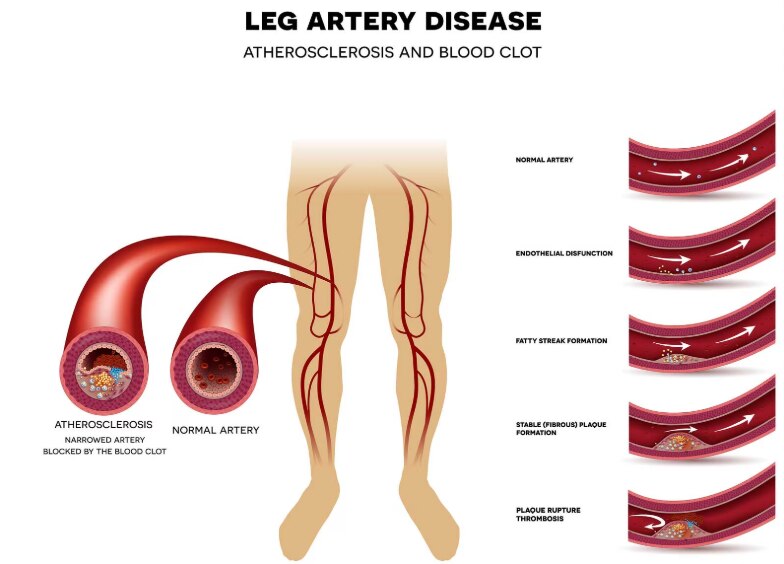
Calf, thigh or buttock pain that starts while walking and eases after a few minutes of rest is a classic sign of peripheral artery disease (PAD), which reduces blood flow through the leg arteries.
Varicose veins are enlarged veins causing aching, heaviness or swelling; deep-vein thrombosis (DVT) more often causes sudden one-sided swelling, warmth and tenderness. They are not the same problem.
| Pattern | What it suggests | What to do |
|---|---|---|
| PAD signs | Cold feet, numbness, weak pulses, shiny skin, colour change, slow-healing wounds or pain at rest | Arrange a PAD assessment |
| Venous signs | Visible varicose veins, ankle swelling, heaviness, or a warm, swollen, tender calf | Seek assessment; sudden symptoms need urgent review |
| Limb emergency | Suddenly cold, pale or blue leg; sudden severe pain; new numbness or weakness; or a missing foot pulse | Go for immediate assessment, not a routine appointment |
Smoking, diabetes, high blood pressure, high cholesterol, kidney disease, increasing age and known coronary artery disease increase PAD risk. Peripheral vascular disease treatment in Nashik should start with confirming the cause rather than assuming every leg symptom is an arterial blockage.
Persistent rest pain, a non-healing toe or foot wound, or gangrene indicates urgent chronic limb-threatening ischaemia. Care must coordinate circulation assessment, pressure relief, wound treatment, infection evaluation, diabetes control and revascularisation planning; antibiotics alone cannot restore blood flow.
How do clinicians confirm blocked leg arteries?
The first step is to establish that leg symptoms come from reduced arterial flow, not varicose veins or deep-vein thrombosis.
A clinician records smoking, diabetes, kidney disease, blood pressure, cholesterol, medicines and prior heart disease, then asks how far you walk before calf, thigh or buttock pain starts, whether it stops with rest, and whether pain occurs while resting or sleeping. The examination includes:
- Inspecting skin, colour, hair loss, shiny surfaces and wounds
- Comparing foot temperature and colour between both legs
- Feeling femoral, popliteal, ankle and foot pulses
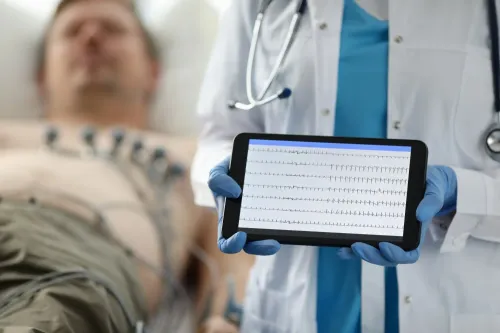
- Measuring the ankle-brachial index (ABI): ankle systolic pressure divided by arm systolic pressure
An ABI of 0.90 or less supports PAD. A result above 1.40 can indicate stiff, non-compressible arteries, so diabetes, kidney disease or heavy calcification can make the ABI falsely reassuring. Toe-brachial index, toe pressure, pulse-volume recordings or skin-perfusion tests may then be needed.
If you searched “how is peripheral vascular disease for treated in Nashik,” these tests usually guide the next choice:
| Test | What it shows | When it is used |
|---|---|---|
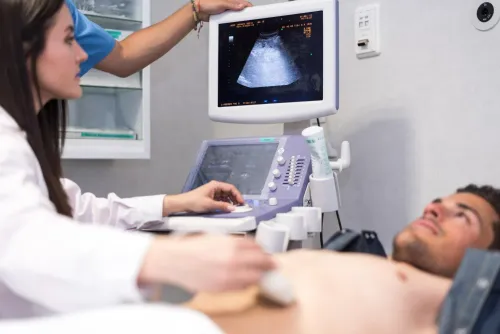
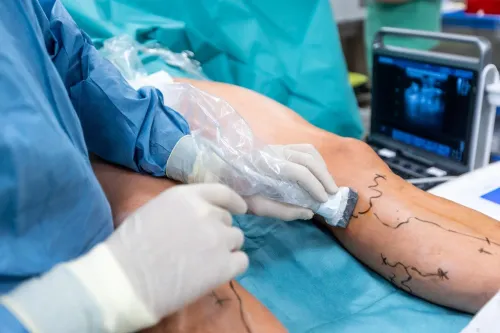
| Doppler or duplex ultrasound | Flow and narrowing | Common first imaging test |
| CT angiography | Detailed artery map using X-ray contrast | Planning anatomy when suitable |
| MR angiography | Artery map without X-rays | When MRI and contrast are appropriate |
| Catheter angiography | Direct arterial images | Usually during intervention planning |
Before contrast imaging, review allergy history, kidney function, diabetes treatment and current medicines.
What treatment comes before angioplasty?
Stable claudication usually starts with risk reduction, not immediate angioplasty. This is the usual starting point for peripheral vascular disease treatment in Nashik and elsewhere, because reopening one artery does not remove the risks driving disease in the rest of the circulation.
1. Stop tobacco completely. Join a structured or supervised walking programme for at least 12 weeks: walk until moderate or strong leg discomfort develops, rest until it eases, then repeat the cycle. Add daily foot inspection, protective footwear, weight management, diabetes control, blood-pressure treatment, cholesterol reduction and management of other cardiovascular risks.
2. Use medicines only after individual review. An antiplatelet medicine and high-intensity statin are common components, but do not start aspirin, clopidogrel or an anticoagulant without advice. The clinician checks bleeding risk, kidney function, heart failure and drug interactions.
3. Consider cilostazol only when it is appropriate for claudication. It is unsuitable for people with heart failure, and it does not treat an acutely threatened limb or replace walking and risk reduction.
Referral for revascularisation becomes necessary when walking limits daily activities despite exercise and medicines. A wound that will not heal, persistent rest pain or gangrene requires urgent vascular assessment rather than a routine follow-up.
Which leg artery treatment fits the blockage?
A short, focal narrowing may suit catheter treatment; extensive disease, a suitable vein, failed catheter treatment or chronic limb-threatening ischaemia may favour bypass. Leg artery treatment in Nashik is chosen after considering the artery involved, lesion length, calcification, chronic total occlusion, diffuse disease, symptoms, limb threat, previous procedures, kidney function, bleeding risk and surgical fitness.
| Option | What it involves | When it fits | Main trade-offs |
|---|---|---|---|
| Catheter-based treatment | Balloon angioplasty, drug-coated technology, stent placement, atherectomy where appropriate, or treatment of thrombus | Disabling symptoms despite exercise and medicines, or limb-threatening disease with anatomy suitable for endovascular access | Smaller wound, less initial surgical trauma and faster early recovery; risks include access-site bleeding, contrast-associated kidney injury, dissection, clotting, distal embolisation, restenosis and repeat procedures |
| Bypass surgery | A graft, often using a suitable vein, routes blood around the blocked segment | Long or diffuse disease, selected chronic total occlusions, failed catheter treatment or chronic limb-threatening ischaemia | Larger operation and anaesthesia, with wound, graft and recovery risks; can provide durable flow in suitable anatomy |
A stent is not automatically better than balloon treatment, and atherectomy is not appropriate for every calcified lesion. Before contrast CT or angiography, the team reviews kidney function, allergy history, current medicines and diabetes treatment.
Direct angioplasty is the wrong first move when smoking, walking, diabetes and medication needs remain untreated: reopening one segment does not remove the disease risk.
How do you arrange safe vascular care and follow-up in Nashik?
Choose a vascular specialist in Nashik who routinely treats lower-limb arterial disease, not only coronary blockages. Compare the clinician’s experience and the facility’s ability to provide imaging, catheter intervention, open bypass surgery, postoperative wound care and emergency limb-ischaemia assessment.
| Care route | What it covers | What to confirm |
|---|---|---|
| Non-surgical care | Walking, smoking cessation, statin and prescribed antithrombotic treatment | Symptoms, ABI or toe pressure, and review date |
| Catheter treatment | Angioplasty, drug-coated technology or stenting | Which artery is narrowed, whether a stent is necessary, and kidney and bleeding safeguards |
| Open or urgent care | Bypass, wound care and emergency assessment | Surgical fitness, usable vein anatomy and a plan for sudden deterioration |
Both surgical and non-surgical options deserve review. Dr Sheetalkumar Hiran at Nine Pearl Hospital can be one assessment option for cardiology-led evaluation and treatment planning.
For leg artery treatment in Nashik, bring prior scans, a medicine list with doses, diabetes readings, kidney-function reports, smoking history, wound photographs and a record of walking distance or rest pain.
Ask which artery is narrowed, what the ABI or toe pressure shows, the treatment goal, what happens without intervention, and how complications will be managed.
Plan follow-up before leaving: prescribed walking, wound checks, medicine adherence and surveillance imaging when ordered. Seek urgent review for renewed walking limitation, rest pain, a non-healing wound or loss of a previously palpable foot pulse.
Related product
 | Peripheral Vascular Disease Peripheral Vascular Disease |
Frequently asked questions
Which leg symptoms need a PAD assessment or emergency care?
Walking-related calf, thigh, or buttock pain that eases with rest needs a PAD assessment. Seek emergency care for sudden severe leg pain, a cold or pale foot, new numbness or weakness, or loss of movement.
How do clinicians confirm blocked leg arteries?
Clinicians assess pulses and circulation, then use tests such as the ankle-brachial index. Duplex ultrasound, CT angiography, or catheter angiography can show the blockage when treatment planning requires detailed images.
What treatment comes before angioplasty?
Treatment usually starts with smoking cessation, a supervised walking programme, and control of diabetes, blood pressure, and cholesterol. A clinician may also prescribe antiplatelet and cholesterol-lowering medicines.
Which leg artery treatment fits the blockage?
Balloon angioplasty, stenting, atherectomy, or bypass may be considered based on the artery involved, blockage length, symptoms, limb risk, and your overall health.
How do you arrange safe vascular care and follow-up in Nashik?
Choose a vascular or interventional cardiology team that can explain the diagnosis, treatment alternatives, medication plan, warning signs, and follow-up schedule. Ask where urgent care is available if symptoms suddenly worsen.