


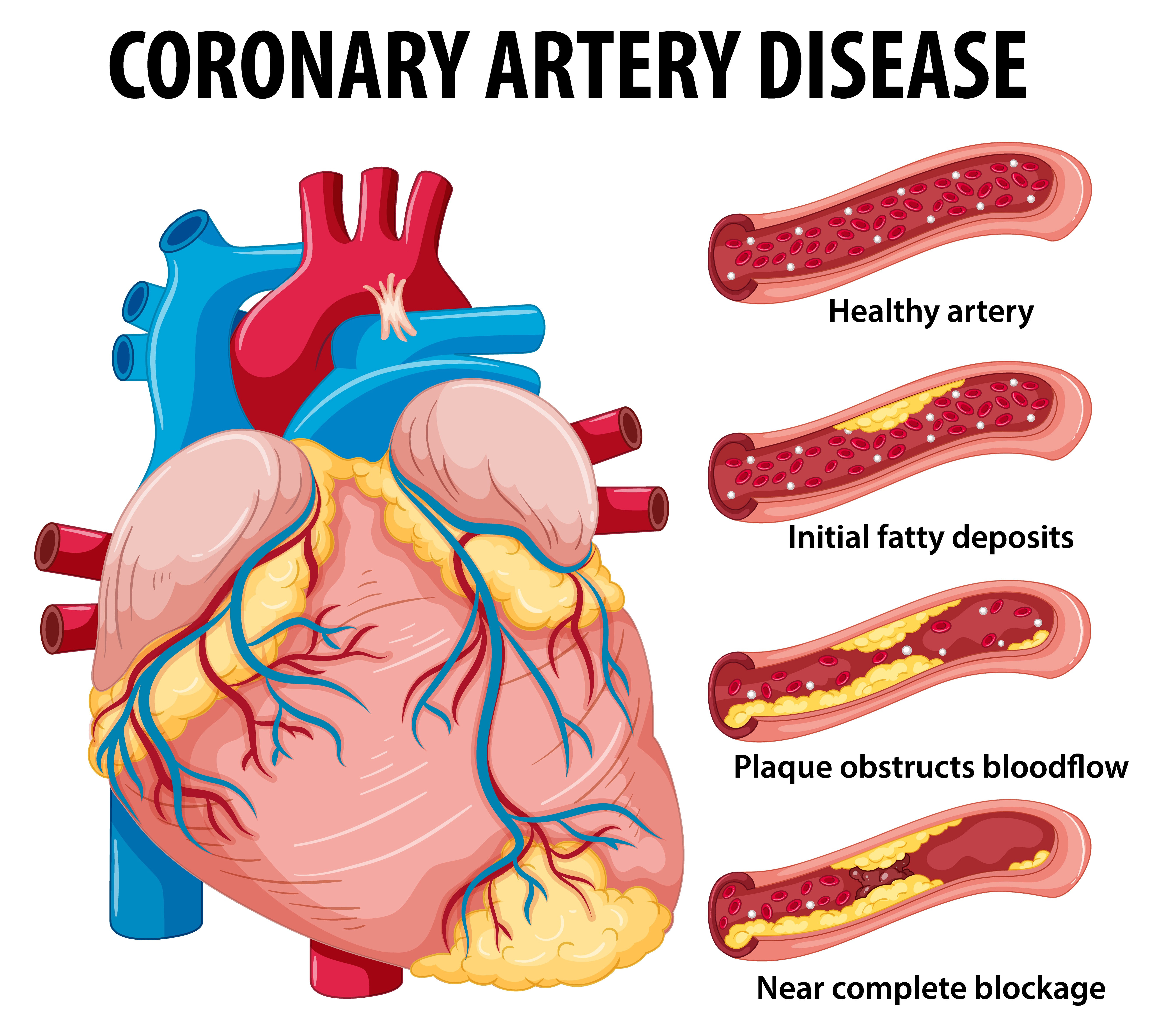
Coronary artery disease develops when the arteries supplying the heart muscle become narrowed or blocked, commonly because of plaque buildup. The condition may develop gradually and can eventually reduce blood flow to the heart.
Understanding coronary artery disease is particularly important because symptoms and severity can vary considerably between individuals.
What Symptoms Can Coronary Artery Disease Cause?
One of the best-known symptoms is angina—chest discomfort related to reduced blood supply to the heart.
It may feel like:
- Pressure
- Tightness
- Heaviness
- Squeezing
- Burning or discomfort
Some people experience discomfort during physical activity because the heart requires more oxygen when working harder. Breathlessness, weakness or reduced exercise capacity can also occur.
Coronary disease can also lead to a heart attack if blood flow becomes suddenly blocked.
Who Is at Greater Risk?
Several factors can contribute to cardiovascular risk. Common considerations include high blood pressure, diabetes, abnormal cholesterol, smoking, excess weight, limited physical activity, age and family history.
Having a risk factor does not automatically mean someone has coronary artery disease. Similarly, feeling healthy does not necessarily establish that the arteries are normal.
This is why cardiovascular risk should be assessed individually.
How Is Coronary Artery Disease Investigated?
The investigation depends on symptoms and clinical findings.
A cardiologist may use a combination of medical history, physical examination, ECG, blood tests, echocardiography, stress testing or cardiac imaging.
When more detailed information about coronary arteries is required, coronary angiography may be considered. During an angiogram, contrast material and X-ray imaging allow clinicians to examine the coronary arteries for narrowing or blockage.
Does Every Blockage Require Angioplasty?
Treatment depends on the location and significance of disease, symptoms, overall health and other clinical factors. Some patients can be managed with medications and lifestyle modification, while others may require procedures to restore blood flow.
When a significant narrowing or blockage is suitable for percutaneous treatment, angioplasty may be performed, often together with stent placement. Other patients may require different approaches, including bypass surgery.
For people seeking coronary artery disease treatment in Nashik, Dr Sheetalkumar Hiran at Nine Pearl Hospital provides cardiac evaluation and management based on individual clinical requirements.
Coronary artery disease should not be approached with a one-treatment-fits-all mindset. The purpose of cardiac evaluation is to establish whether disease is present, understand its significance and choose an appropriate management strategy.
People experiencing new or worsening chest discomfort, particularly with breathlessness, sweating, nausea or dizziness, should treat possible heart attack symptoms as an emergency rather than waiting for a routine appointment.