

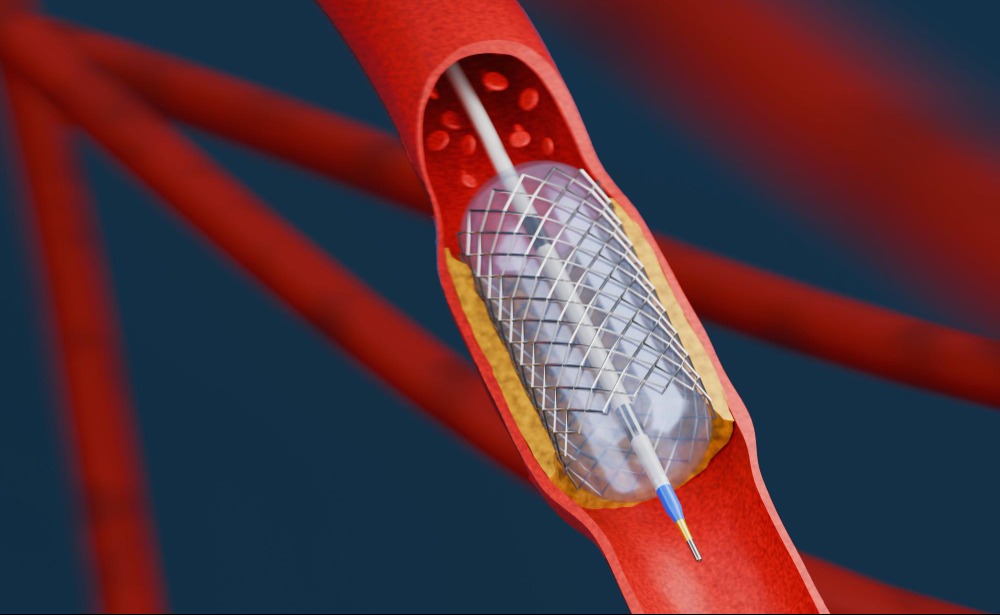
A coronary stent is a small mesh tube placed inside an artery to help maintain blood flow after a narrowed or blocked section has been opened.
Stent placement is commonly performed as part of coronary angioplasty, also called percutaneous coronary intervention or PCI.
Why Is a Stent Used?
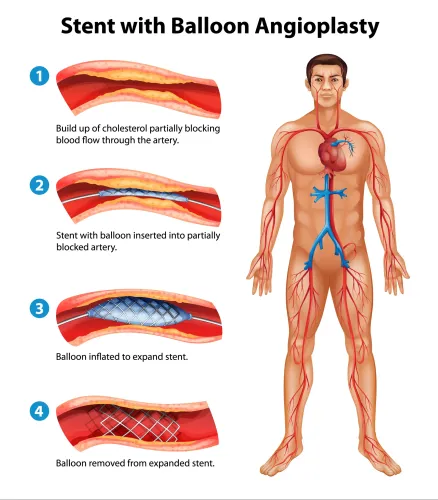
When plaque narrows a coronary artery, blood flow to the heart muscle can become restricted.
During angioplasty, a balloon is used to open the narrowed area. A stent is then commonly positioned within the treated section to help keep the artery open.
Stents are therefore not separate from angioplasty in many cases; they form part of the same catheter-based treatment.
Are There Different Types of Stents?
Modern coronary treatment commonly uses drug-eluting stents. These stents release medication over time to help reduce the chance of excessive tissue growth causing the treated area to narrow again.
The type of stent and treatment strategy should be selected according to the patient's clinical circumstances.
What Happens After Stent Placement?
Receiving a stent does not mean cardiovascular treatment is finished.
Patients are commonly prescribed antiplatelet medication to reduce the risk of blood clots forming within the stent. These medicines need to be taken exactly as directed by the treating cardiology team. Stopping prescribed medication without medical guidance can create serious risks.
Long-term care may also involve:
- Blood-pressure management
- Cholesterol management
- Diabetes control when applicable
- Avoiding tobacco
- Heart-healthy eating
- Appropriate physical activity
- Follow-up cardiac reviews
Does a Stent Cure Coronary Artery Disease?
A stent treats a specific narrowed or blocked section of an artery. It does not remove the underlying tendency to develop atherosclerotic cardiovascular disease elsewhere.
This is why medication, lifestyle measures and follow-up remain important after a successful procedure.
What Should You Ask Before the Procedure?
Patients can ask:
- Why is stenting recommended in my case?
- Which coronary artery requires treatment?
- What are the expected benefits and possible risks?
- Which medicines will I need afterward?
- When can I resume normal activity?
- What symptoms after discharge require medical attention?
For patients considering stent placement in Nashik, Dr Sheetalkumar Hiran at Nine Pearl Hospital provides interventional cardiac evaluation and treatment according to individual clinical needs.
Understanding both the procedure and the care required afterward helps patients participate more actively in their treatment.
Stent placement can restore blood flow through an important coronary narrowing, but successful long-term management also depends on controlling the cardiovascular disease process that contributed to the blockage in the first place.