


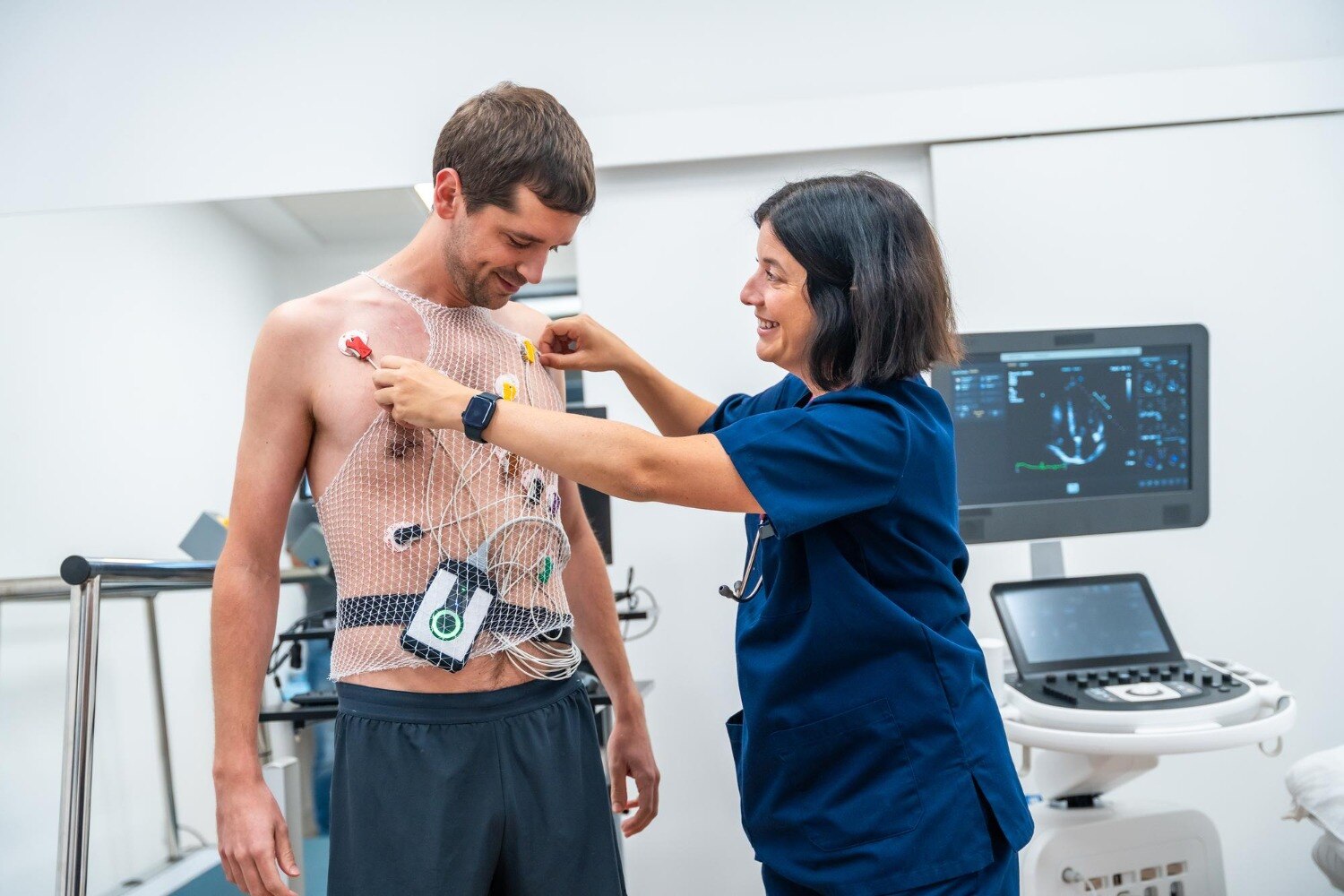
You will register, give consent, have electrodes attached to your chest, and leave with instructions for wearing and returning the recorder. By the end, you should know how to prepare, continue daily activities safely, document symptoms, handle common device problems, and understand when the report will be reviewed.
Key takeaways
- Wear loose clothing so the technician can attach and check the electrodes.
- Keep the recorder dry and follow the technician’s instructions during monitoring.
- Log symptoms, activity, sleep and the exact time each event occurs.
- Return the monitor as instructed so the cardiologist can review your recording.
What happens when you arrive for the appointment?
Your appointment starts at registration in the cardiology or diagnostic department. Staff confirm your identity, prescription and contact details before directing you to the technician.
1. Tell the team about palpitations, dizziness, fainting, chest pain, breathlessness, current medicines, skin allergies and implanted devices such as a pacemaker. Do not stop prescribed medicine unless your treating clinician instructs you.
2. Read the consent form before signing. Ask how long you will wear the recorder, who to contact if it stops working or an electrode comes loose, and when you must return it. Fasting and sedation are not normally required.
3. The technician records baseline details, explains what happens during Holter monitoring and checks that the selected recorder suits the reason for testing. The fitting is usually painless, although adhesive removal can cause temporary redness or itching.
4. Before you leave, the technician checks the first signal for a stable recording and gives instructions for wearing the device and noting symptoms. A Holter monitor records electrical activity, including rhythm changes, pauses and conduction problems; it does not show valve structure, pumping strength or heart anatomy like an echocardiogram.
New severe chest pain, fainting, severe breathlessness or sustained palpitations with weakness require urgent medical care. Do not wait for a Holter result.
How are the electrodes and recorder fitted?
The fitting is usually painless and takes place in a private area. These Holter monitoring steps in Nashik prepare the skin, confirm a clean signal and ensure you can manage the recorder before leaving.
1. The technician asks you to expose your upper chest while keeping the rest of your body covered. Tell them before application if plasters, electrode gel or medical tape have caused a reaction.
2. The technician cleans the electrode sites to remove sweat and oil. They may lightly abrade small areas of skin to improve contact; if chest hair prevents adhesion, they clip only the necessary patches rather than extensively shaving your chest.
3. Adhesive electrodes are placed at specific positions on your chest. Thin wires run from the electrodes to the portable recorder, which you wear on a belt, strap or clothing clip.
4. The technician checks the live tracing for a stable signal. A poor connection can create noise or missing data, so they adjust an electrode or cable before you leave.
5. The cables are secured to reduce pulling during normal movement. The technician shows you the recorder’s display, event button or indicator light if your model has one.
6. Practise carrying or wearing the recorder and repeat the instructions for replacing a loose electrode. Ask what number to call if an electrode comes away.
Removing the electrodes can cause temporary redness, itching or soreness. Report marked swelling, blistering or irritation that persists; do not cover a rash with household tape.
How should you prepare, and what can you do while wearing it?
Bathe before the appointment: a conventional Holter recorder and its electrodes must stay dry. This is the essential Holter monitor preparation. Do not put body lotion, oil, talcum powder or perfume on your chest because these products reduce electrode adhesion.
Wear a loose shirt or kurta that gives the technician access to your chest and leaves space for the recorder.
- Bring a current medication list showing each medicine, dose and timing. Continue prescribed medicines unless the treating clinician instructs you to stop.
- Fasting and sedation are not normally required.
- Wear the monitor for the prescribed period, commonly 24 or 48 hours.
- You can usually work, sleep, walk, climb stairs, travel locally and follow your normal routine.
- Avoid swimming and showering unless the supplied model is specifically approved for water exposure.
What happens during Holter monitoring depends partly on how often your symptoms occur:
| Recording option | Typical use | Practical point |
|---|---|---|
| 24-hour Holter | Symptoms occurring most days | Wear it continuously for one day |
| 48-hour Holter | Symptoms needing a longer observation window | Follow the exact removal time |
| Longer patch or ambulatory recording | Symptoms occurring less often | A longer period improves the chance of capturing an episode |
Follow the Nashik hospital’s written restrictions on magnets, electrical equipment, vigorous exercise and nearby machinery. Recorder models differ, so do not rely on instructions from another device.
What should you record, and what if the device causes a problem?
A key part of what happens during Holter monitoring is matching your diary with the ECG timestamps. Write the exact time of every symptom and describe what you felt: palpitations, dizziness, chest pain, breathlessness or near-fainting.
Record these details in the patient diary:
- What you were doing, including whether you were sitting, standing, lying down or walking
- The time you went to sleep and woke up
- Medicine times and meals
- Significant emotional stress
- The time you pressed the event button, followed by the same timestamp in the diary
Press the event button when the hospital instructs you. A matching timestamp helps the reviewing clinician see whether your symptom coincided with an abnormal rhythm.
| Problem | What it can mean | What to do |
|---|---|---|
| Loose electrode | Electrical noise or signal loss, called artefact, can make the ECG difficult to interpret | Follow the supplied cleaning and reattachment instructions; do not remove the entire setup without advice |
| Skin irritation | Adhesive may be causing redness, itching or a rash | Call the monitoring department; do not cover the rash with household tape |
| Alert, stopped recording or wet recorder | The recording may be incomplete or the device damaged | Keep it safe, note the time and contact the hospital promptly |
Do not open, reset or immerse the recorder unless staff instruct you. New severe chest pain, fainting, severe breathlessness or sustained palpitations with weakness require urgent medical care; do not wait for the Holter report.
When do you return the monitor and receive the result?
Return the recorder, cables and completed diary at the exact time the hospital gives you. Do not remove the electrodes or setup yourself unless staff instruct you to do so.
Staff download the ECG data, check recording quality and compare diary entries with timestamps. A trained technician or monitoring team processes the tracing; a clinician then interprets abnormal rhythms, pauses, conduction problems, heart-rate changes and response to treatment. The report may not be ready when the recorder is removed because analysis takes time.
Before fitting, ask the Holter test hospital in Nashik:
- Where to return the equipment and whether return is in person
- Whether you must keep the recorder and electrodes dry, including shower rules
- Which duration fits your symptoms, the total charge and report turnaround
- When and with whom you will discuss the findings
| Duration | What it means | When it applies |
|---|---|---|
| 24 hours | Records one ordinary day and night | Symptoms occur daily or several times a week |
| 48 hours | Covers two days of activity and sleep | Symptoms do not occur reliably every day |
| Longer patch or event monitoring | Extends the chance of capturing an episode | Palpitations, dizziness or fainting occur less often |
For a Holter monitoring procedure in Nashik, Dr Sheetalkumar Hiran at Nine Pearl Hospital can help match monitoring duration to symptom frequency and arrange a clinician-led discussion of the report. A normal 24-hour recording does not exclude an intermittent rhythm problem; ask about longer monitoring if no episode occurred.
Related product
 | Holter and Event Monitors Also known as ambulatory EKG; continuous EKG; EKG event monitors. View product → |
Frequently asked questions
What happens when you arrive for a Holter monitoring appointment?
You register in the cardiology or diagnostic department, confirm your identity, prescription and contact details, then meet the technician.
How are the electrodes and Holter recorder fitted?
The technician prepares your skin, attaches adhesive electrodes to your chest and connects them to a portable recorder.
How should you prepare for Holter monitoring?
Wear loose clothing, follow the hospital’s bathing instructions and tell staff about skin allergies or medicines before fitting.
What should you record while wearing a Holter monitor?
Write down the time and details of symptoms, exercise, meals, sleep and activities that could help explain changes in your heart rhythm.
What happens if the Holter device causes a problem?
Contact the hospital if an electrode comes loose, the recorder stops, the skin becomes severely irritated or you develop serious symptoms.