

Calf pain that appears while walking, a cold or discoloured foot, or a wound that will not heal needs the right vascular assessment, not just treatment for ordinary leg pain. You will be able to identify the likely type of problem, choose the appropriate clinician in Nashik, compare testing and treatment options, and recognise when routine booking is unsafe.
Key takeaways
- Walking pain relieved by rest can indicate PAD, not a muscle strain.
- Sudden coldness, numbness, or severe leg pain needs emergency care.
- Ask whether the assessment includes ankle-brachial index testing and pulse checks.
- Compare clinics by diagnostic access, specialist expertise, and follow-up planning.
Is the problem PAD, venous disease, or an emergency?
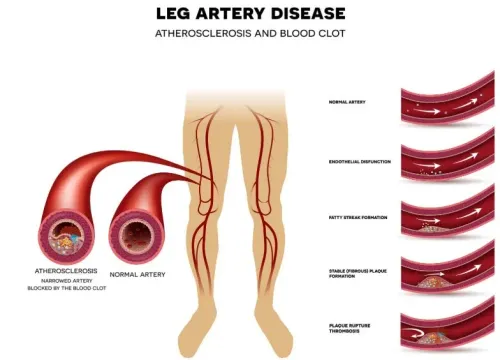
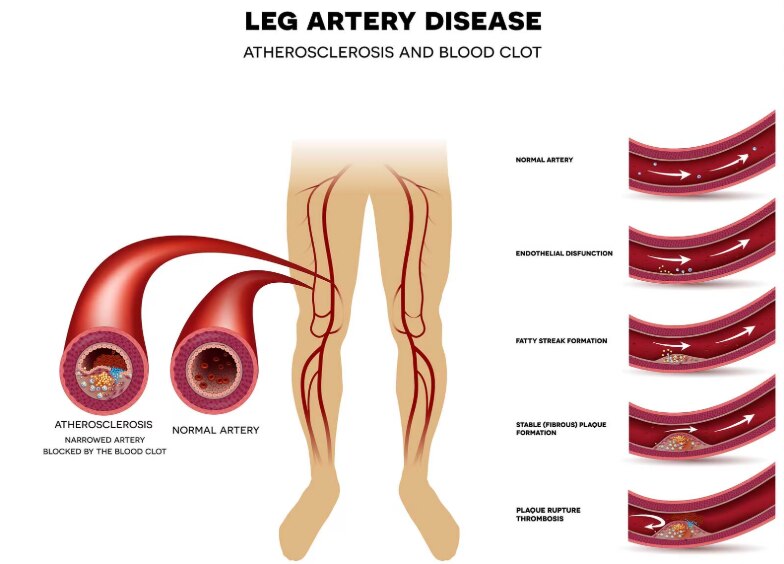
Reproducible calf, thigh, or buttock pain during walking that settles with rest points to lower-extremity peripheral artery disease (PAD), not ordinary leg strain. PAD is narrowed or blocked arteries; “peripheral vascular disease” is broader and can include venous conditions, which need different tests.
| Condition | Clues | Appropriate next step |
|---|---|---|
| PAD | Cold feet, numbness, weakness, shiny skin, hair loss, colour change, erectile dysfunction, or slow-healing wounds | Vascular assessment with pulse examination and ankle-brachial index |
| Venous disease or DVT | New one-sided swelling, warmth, tenderness, redness, varicose veins, or skin ulceration | Prompt venous assessment and duplex ultrasound, not an ABI |
| Severe PAD | Foot pain at rest, especially at night, gangrene, or tissue loss | Urgent vascular review; do not rely on painkillers alone |
Diabetes, tobacco use, high blood pressure, high cholesterol, kidney disease, older age, obesity, and previous heart or cerebrovascular disease increase PAD risk. Diabetes-related neuropathy can hide ischaemic pain, so inspect your feet daily.
Seek emergency care instead of waiting for a routine appointment or searching vascular treatment near me if you have:
- Sudden severe leg pain
- A pale or blue foot, or a cold limb
- Lost sensation or inability to move the limb
- Blackened tissue or gangrene
- Spreading redness or fever
- Foul discharge from a wound
These signs can indicate acute limb ischaemia or an infected, threatened limb.
Which clinician should you book first in Nashik?
For exertional calf, thigh, or buttock pain, reduced pulses, colour or temperature change, or a non-healing wound, book a vascular doctor or vascular-focused clinic first.
| Clinician | What they can do | Best first choice when |
|---|---|---|
| General physician | Begin assessment and manage blood pressure, cholesterol, tobacco use, and diabetes risk | Symptoms are mild, unclear, or you need initial referral |
| Diabetologist | Treat diabetes and assess neuropathy, foot pressure, and wounds | Diabetes, numbness, or a diabetic foot wound is central |
| Interventional cardiologist | Assess arterial disease and perform catheter-based angioplasty or stenting | PAD needs vascular testing and possible endovascular treatment |
| Vascular surgeon | Provide open surgery and selected endovascular procedures | Blockage is extensive, tissue is threatened, or bypass may be needed |
| Vascular doctor or clinic | Coordinate testing, prevention, wound care, and specialist referral | Walking pain, weak pulses, colour change, coldness, or slow healing is the main problem |
A diabetologist is not a substitute for urgent vascular review when a foot is black, cold, or losing tissue. Referral to a vascular surgeon becomes important for gangrene, threatened tissue, extensive blockage, failed non-invasive treatment, or a possible bypass.
Use the exact symptom when searching for a pvd specialist in nashik or vascular doctor in nashik. Search “leg swelling” for a venous pathway; search “calf pain when walking relieved by rest” for suspected arterial disease.
Sudden severe pain, a pale or blue foot, loss of sensation, or inability to move the limb requires emergency care, not a routine booking.
What should a proper first vascular assessment include?
A proper first vascular assessment combines your symptoms, examination, risk factors, and an objective blood-flow test. It should not jump straight to angiography.
1. Describe walking pain: where it occurs, how far you walk before it starts, and whether rest relieves it. Report rest pain, numbness, weakness, cold feet, colour change, erectile dysfunction, or reduced walking ability.
2. Explain every wound, including when it began, whether it is healing, and any discharge. The clinician should inspect both feet and legs for ulcers, tissue loss, shiny skin, hair loss, colour change, infection, and pressure points.
3. Ask for pulse examination in both legs, not just the painful one. The clinician should compare temperature, capillary refill, sensation, and movement between limbs.
4. Review smoking or tobacco use, blood pressure, cholesterol, diabetes, kidney function, current medicines, and previous heart or cerebrovascular disease. These factors change both risk and treatment.
5. Ask whether an ankle-brachial index will be recorded. ABI compares systolic ankle pressure with arm pressure: 0.90 or less supports reduced arterial flow, while above 1.40 suggests stiff, poorly compressible arteries.
Diabetes or advanced kidney disease can make ABI falsely high. Toe-brachial index, toe pressure, pulse-volume recordings, exercise ABI, or duplex ultrasound may then be needed. Duplex maps flow without ionising radiation or iodinated contrast.
CT angiography or MR angiography provides a detailed arterial map when revascularisation is being considered. Selection depends on kidney function, contrast allergy, implanted devices, and local imaging expertise.
How do you compare a peripheral artery disease clinic in Nashik?
Compare a peripheral artery disease clinic in Nashik by its assessment and follow-up, not by its search ranking. Choose a service that can provide objective testing, duplex imaging, risk reduction, structured exercise advice, foot and wound care, and urgent escalation.
| Check before booking | What good care looks like | Why it matters |
|---|---|---|
| ABI or another physiologic result | The clinician records the number and explains it | An unrecorded test cannot support a treatment decision |
| Arterial level | The report identifies disease in the aorto-iliac, femoropopliteal, or below-knee arteries | Location affects treatment choices |
| Medical prevention | The clinician reviews statin, tobacco, blood-pressure, and diabetes treatment | An angioplasty does not remove cardiovascular risk |
| Non-invasive care | You receive a walking plan, footwear advice, and wound instructions | Stable symptoms often need prevention and exercise before a procedure |
| Invasive treatment | The clinician explains angioplasty, stenting, bypass, and non-procedure alternatives | A scan alone does not prove that intervention is necessary |
Ask whether duplex ultrasound, toe-pressure testing, wound services, and emergency pathways are available. A multidisciplinary service may include an interventional cardiologist, vascular surgeon, interventional radiologist, cardiologist, diabetologist, podiatrist, or wound-care clinician.
For readers searching vascular treatment near me, Dr Sheetalkumar Hiran at Nine Pearl Hospital may be relevant for cardiology-led assessment and catheter-based vascular care; confirm which tests, specialists, wound services, and urgent pathways are available for your case.
An invasive recommendation without symptoms, objective testing, alternatives, and a clear follow-up plan deserves a second vascular opinion.
What treatment should you expect after diagnosis?
An abnormal scan does not automatically mean you need a procedure. For stable claudication, peripheral vascular disease treatment in Nashik usually starts with risk reduction and walking therapy, then escalates only if symptoms limit daily life despite treatment or the limb’s viability is threatened.
1. Stop tobacco, control blood pressure and diabetes, and use high-intensity statin therapy when appropriate. An antiplatelet or selected antithrombotic plan may be indicated; bleeding risk and other illnesses determine the choice.
2. Join a structured walking programme rather than simply being told to “walk more.” Walk in repeated bouts until claudication begins, rest until it settles, and repeat across several sessions each week for about 12 weeks. A foot ulcer, severe ischaemia, poor balance, or unsafe walking requires adaptation or medical supervision.
3. Consider angioplasty, stenting, or bypass when symptoms remain lifestyle-limiting after medical therapy and exercise, or when tissue is threatened. The decision depends on blockage location and length, tissue loss, available vein, surgical risk, kidney function, expected durability, and local expertise.
Diabetes needs extra foot protection, suitable footwear, regular skin checks, and wound care because neuropathy can hide ischaemic pain. Arterial calcification can also make the ankle-brachial index falsely high, so ask whether toe pressures or another physiologic test is needed.
Before consenting, ask for the documented circulation result, treatment alternatives, and clear instructions for urgent return.
Frequently asked questions
How can you tell whether leg symptoms suggest PAD, venous disease, or an emergency?
Calf, thigh, or buttock pain that repeatedly starts with walking and settles with rest suggests PAD. Swelling, heaviness, skin changes, or ulcers can point to venous disease. Sudden severe pain, a cold or pale limb, new numbness, or loss of movement requires emergency assessment.
Which clinician should you book first for suspected vascular disease in Nashik?
Book a vascular doctor or cardiologist experienced in peripheral artery disease when walking pain, reduced pulses, non-healing foot wounds, or circulation concerns are present. Choose urgent care instead of a routine appointment for sudden or severe symptoms.
What should a first vascular assessment include?
Expect a symptom and risk-factor history, examination of leg colour and temperature, pulse checks, blood-pressure comparison between limbs, and an ankle-brachial index test. The clinician may order duplex ultrasound or further imaging when the findings require it.
How should you compare a peripheral artery disease clinic in Nashik?
Compare the clinic’s access to vascular examination, ankle-brachial index testing, duplex ultrasound, specialist review, catheter-based treatment when indicated, and documented follow-up. Check that the clinic explains alternatives and warning signs clearly.
What treatment can follow a peripheral vascular disease diagnosis?
Treatment depends on whether the problem is arterial or venous and how severe it is. It can include supervised walking, smoking cessation, blood-pressure and cholesterol treatment, medicines, wound care, compression for suitable venous disease, angioplasty or stenting, and surgery when necessary.