

The right EPS decision depends on more than finding a hospital that lists cardiology services: you need the correct referral, an electrophysiologist, an EP-capable catheterisation laboratory and a written estimate that separates diagnosis from ablation. By the end, you will know when an EPS is appropriate, what to verify about availability in Nashik, which billing items to request and how to prepare safely.
Key takeaways
- Confirm whether EPS is needed after ECG, Holter monitoring, or unexplained fainting.
- Ask whether ablation can follow immediately if the rhythm source is identified.
- Request an itemised estimate covering doctors, hospital, laboratory, medicines, and follow-up.
- Verify catheter-lab availability, specialist coverage, admission timing, and emergency backup.
When is an EPS the right next test?
An EPS is the right next test when unexplained fainting, recurrent palpitations, documented tachycardia, suspected supraventricular tachycardia, ventricular tachycardia, or an abnormal ECG points to a rhythm problem that non-invasive tests have not explained. Structural heart disease and the danger of the suspected rhythm also influence the referral.
| Option | What it shows | When it is chosen |
|---|---|---|
| ECG | Rhythm at one moment | First check for an active abnormality |
| Echocardiogram | Heart structure and pumping | Suspected valve disease, weak muscle, or enlargement |
| Holter monitor | Continuous rhythm, usually for 24–48 hours | Symptoms happen daily or nearly daily |
| Event monitor | Patient-triggered or automatic recordings over longer periods | Episodes are less frequent |
| Stress test | Rhythm and blood flow during exertion | Symptoms occur with exercise |
| Implantable loop recorder | Long-term recording under the skin | Rare fainting or palpitations remain unexplained |
| EPS | Intracardiac signals and induced rhythms | A suspected arrhythmia needs precise diagnosis or possible treatment |
If symptoms are intermittent, no dangerous rhythm has been recorded, and longer monitoring could capture an episode, choose a Holter, event monitor, or implantable loop recorder before an invasive test. An ECG, echocardiogram, or stress test may also answer the immediate question.
An electrophysiology study in Nashik, also called a heart rhythm study in Nashik, becomes more useful when the diagnosis remains unclear after these tests or a specific tachycardia needs confirmation. A normal EPS does not exclude every cause of palpitations or fainting.
What happens during an EPS procedure, and can ablation happen then?
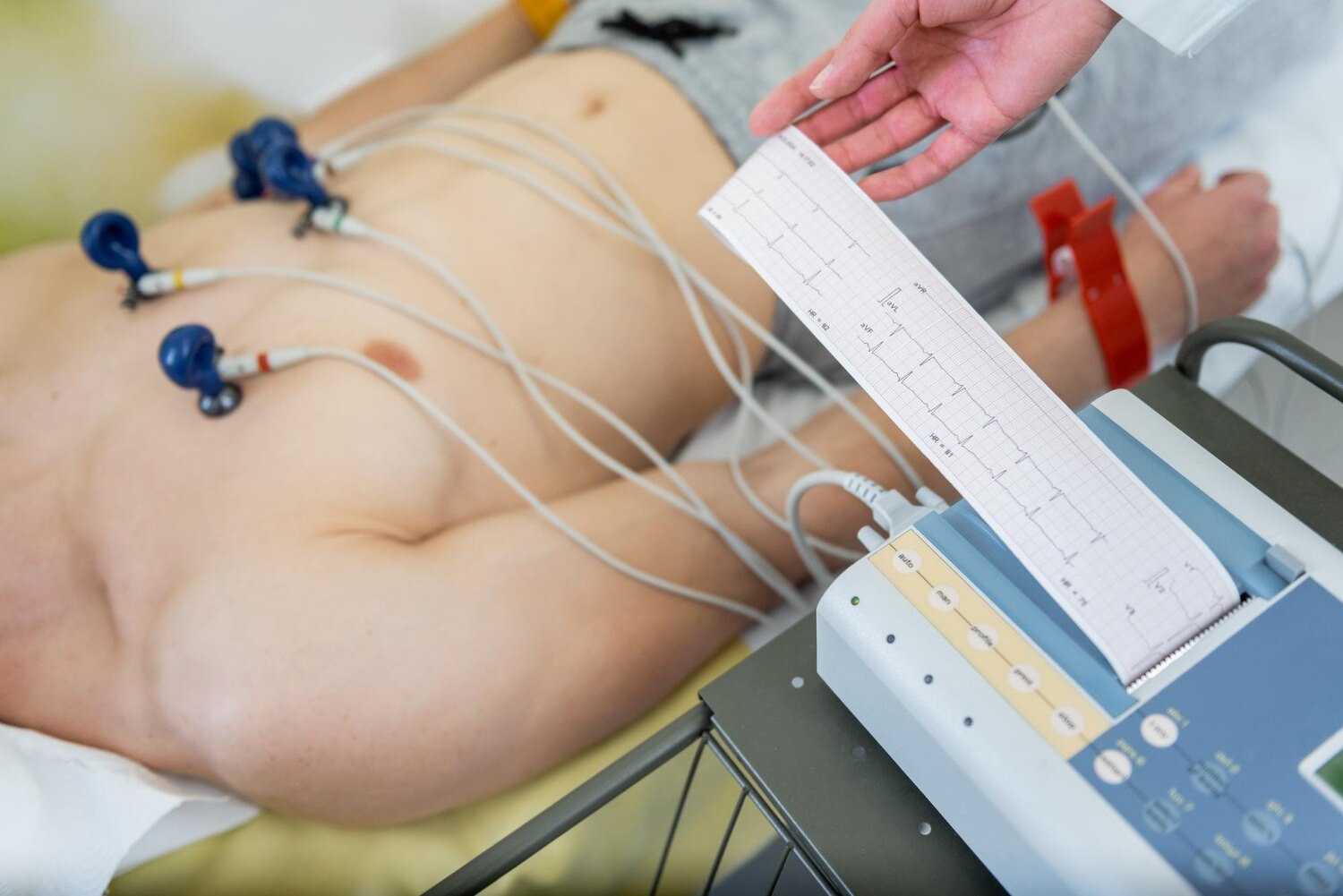
An EPS is an invasive rhythm study, not a routine ECG or Holter monitor. During an EPS procedure in Nashik, you remain connected to continuous ECG, blood-pressure and oxygen monitoring while the team studies the heart’s electrical pathways.
- The team cleans the catheter-entry area, usually the groin, gives local anaesthetic and provides light or moderate sedation when needed.
- A sheath enters a blood vessel, usually a vein in the groin. Thin electrode catheters pass through the sheath and are guided to specific positions inside the heart.
- The catheters record intracardiac electrical signals. The team also uses controlled pacing—small, timed electrical impulses—to trigger or map an abnormal rhythm.
- After recording the findings, the catheters and sheath are removed, pressure is applied to the site, and you remain under observation.
A diagnostic EPS ends after the rhythm is identified or assessed. EPS-guided catheter ablation continues with specialised mapping and ablation catheters that deliver radiofrequency heat or cryotherapy to the responsible tissue. That adds procedure time, equipment and post-procedure observation, so an EPS test in Nashik should not be priced as the same service as ablation.
Before admission, confirm whether the plan is diagnosis only, diagnosis with possible ablation, or a separately scheduled treatment. Ask what happens if the suspected rhythm cannot be induced: the team may complete the study without ablation, extend testing, or recommend another monitoring plan.
How to verify EPS availability in Nashik
A hospital advertising cardiology or a general cath lab does not prove that an electrophysiology study in Nashik is available. Confirm an EP-capable cardiac catheterisation laboratory and an electrophysiologist who performs diagnostic EPS and the exact ablation under consideration.
Ask these questions before scheduling your EPS test in Nashik:
- Which electrophysiologist will perform it, and on which procedure days?
- Is the planned service diagnostic EPS, radiofrequency ablation, cryoablation, or a complex ventricular-arrhythmia procedure?
- Are continuous ECG and blood-pressure monitoring, immediate cardioversion or defibrillation, and temporary pacing available?
- Can staff observe you after sheath removal, and is overnight observation provided?
- What admission length applies if the study becomes an ablation or recovery takes longer?
| Procedure | Confirm locally | When referral may be needed |
|---|---|---|
| Diagnostic EPS | EP operator, monitoring, pacing and post-sheath observation | No suitable operator or emergency backup |
| Radiofrequency ablation | Mapping and energy-delivery equipment | Operator or equipment unavailable |
| Cryoablation | Appropriate cryoablation catheter and trained operator | The specific rhythm is not treated locally |
| Ventricular-arrhythmia work | Experienced operator and higher-level backup | Complex case or low local procedure volume |
A heart rhythm study in Nashik may still require referral if the needed operator, equipment, emergency coronary or cardiac-surgical backup, or recovery capacity is unavailable. Someone considering Dr Sheetalkumar Hiran at Nine Pearl Hospital can apply the same checklist by asking who performs the study, what equipment is on site, and whether observation occurs locally.
Related products
 | Electrophysiology Studies (EPS) What are electrophysiology studies? Electrophysiology studies (EPS) are tests that help doctors understand the nature... View product → |
 | Electrophysiology Studies (EPS) What are electrophysiology studies? Electrophysiology studies (EPS) are tests that help doctors understand the nature of abnormal heart rhythms... View product → |
What should an electrophysiology study cost estimate include?
A reliable electrophysiology study cost in Nashik estimate is a written, itemised quotation, not a single package figure. Ask for these entries before booking:
- The electrophysiologist’s professional fee and consultation fee.
- Pre-procedure ECG, blood tests, kidney-function testing, bleeding-risk testing and imaging when ordered.
- Catheter-lab charges, disposable diagnostic catheters, anaesthesia or sedation, and medicines used during the procedure.
- Room charges, overnight-observation charges, expected admission length, follow-up visits and applicable taxes.
- A separate price for diagnostic EPS only, and for EPS followed by radiofrequency ablation or cryoablation.
- Separate charges for three-dimensional mapping and extra ablation catheters.
The quotation should state what happens if ablation is attempted during the same sitting. Diagnostic EPS and EPS-guided ablation are not the same service: ablation adds mapping, energy-delivery equipment, specialised catheters, procedure time and observation.
Ask the billing team to confirm these points in writing:
- Whether insurance pre-authorisation is required and who submits it.
- Which items are excluded, including medicines, additional tests or specialist reviews.
- How complications are billed.
- What could extend the stay, such as bleeding, rhythm instability, extra monitoring or an unplanned ablation.
When comparing an EPS test in Nashik, request the hospital’s final estimate after reviewing your records, medicines and planned procedure. A low headline figure can exclude the catheter-lab fee, disposable equipment, overnight care or treatment added after the rhythm is identified.
How should you prepare, and what should you plan for after the study?
Before booking an EPS procedure in Nashik, confirm the operator’s name and specialty, the planned procedure, expected stay, insurance pre-authorisation and the emergency contact number. For a heart rhythm study in Nashik, follow the written fasting window; do not guess it.
1. Ask which medicines to take on the day. Your treating doctor must give specific instructions for anticoagulants and anti-arrhythmic medicines; never stop, restart or change them independently.
2. Disclose every drug allergy and bring requested ECGs, scans, blood reports, including kidney-function and bleeding-risk tests, and an up-to-date medication list. Missing records can delay admission.
3. Arrange transport home, particularly if sedation is planned. Ask whether an adult must stay with you overnight and how long you should avoid driving, work or strenuous activity.
4. Keep the groin access site dry and observe it after discharge. Bruising is common, but increasing swelling can indicate a haematoma. Apply firm pressure for persistent bleeding and use the hospital’s emergency number; seek urgent care for chest pain, breathlessness, fever or sustained palpitations.
The EPS report must be read alongside your symptom history, recorded ECGs or monitor rhythms, scans and medication history. A normal or non-inducible study does not explain every episode: an intermittent arrhythmia may not appear, and palpitations or fainting can have non-arrhythmic causes.
Frequently asked questions
When is an electrophysiology study the right next test?
EPS is considered when unexplained fainting, recurrent palpitations, documented tachycardia, suspected supraventricular or ventricular tachycardia, or an abnormal ECG remains unexplained after non-invasive testing. Structural heart disease and the suspected rhythm’s risk also affect the referral.
What happens during an EPS, and can ablation happen during the same procedure?
A specialist guides temporary electrode catheters through a blood vessel to the heart, records electrical signals, and uses programmed stimulation to reproduce or map an abnormal rhythm. If the source is suitable and you consent, catheter ablation may be performed during the same session.
How can I verify EPS availability in Nashik?
Ask the hospital whether it performs diagnostic EPS, which electrophysiologist leads the procedure, whether the catheter laboratory is currently operational, how urgent cases are handled, and what admission and observation arrangements are available.
What should an EPS cost estimate include?
Request separate figures for consultation, pre-procedure tests, hospital and catheter-laboratory charges, specialist fees, catheters and consumables, sedation or anaesthesia, medicines, room or observation time, ablation if needed, and follow-up.
How should I prepare for an EPS and plan for recovery?
Bring ECGs, Holter reports, medication lists, and prior cardiac records. Follow the hospital’s fasting and medicine instructions, arrange transport, and plan for observation, wound care, activity limits, and follow-up after discharge.