

You may want to know exactly what will happen from admission to discharge, including the breathing tube, heart-lung machine, chest incision, graft-collection site and intensive-care stay. By the end, you will know the usual bypass surgery sequence, which timings vary, and which hospital capabilities deserve direct questions before you consent.
Key takeaways
- Bring your angiogram, ECG, medication list and previous medical records.
- Ask whether grafting will use your chest artery, a vein, or both.
- Confirm whether your operation requires a heart-lung machine.
- Plan for intensive care first, then gradual walking and rehabilitation.
What happens before you enter the operating theatre?
Admission begins with a review of why bypass is needed and whether you are stable enough for planned surgery. The team examines your coronary angiogram and checks your ECG, echocardiogram, chest imaging, kidney function, blood count, blood group and clotting results.
- A cardiac surgeon and anaesthetist review your medical history, allergies, previous operations and current medicines. Ask exactly when to stop medicines such as warfarin, apixaban, aspirin or clopidogrel; never stop them without instructions.
- The hospital confirms fasting times, usually from the night before, and explains admission, blood-donor arrangements and consent. Requirements differ, so confirm them with the bypass surgery procedure in Nashik team.
- Nurses record your vital signs, insert an intravenous cannula, attach monitoring electrodes and prepare the skin. You may receive an antibiotic before incision.
- Staff give you a surgical gown, remove jewellery and body hair only where needed, and ask you to empty your bladder. A urinary catheter is usually placed after anaesthesia begins.
- You then meet the operating team and are transferred to theatre.
New chest pressure, breathlessness, fainting, sweating or pain spreading to your arm, jaw or back needs emergency assessment, not routine bypass admission.
What happens after anaesthesia begins?
After general anaesthesia makes you unconscious, the team secures your breathing and monitors your vital organs before the bypass work begins.
1. The anaesthetist places a breathing tube and connects it to a ventilator. ECG electrodes, a blood-pressure cuff, an arterial line, a central venous line and temperature probes provide continuous readings.
2. A urinary catheter measures urine output during the operation. The team gives intravenous medicines, including antibiotics and drugs that control blood pressure, heart rate and bleeding.
3. Nurses clean the chest with antiseptic solution and prepare any planned harvest site on the leg or arm. Sterile drapes leave only the operative areas exposed, reducing contamination.
4. The surgeon makes a midline chest incision and divides the breastbone in a median sternotomy. A retractor opens the chest, and the surgeon opens the sac around the heart to inspect it and prepare the operating field.
5. At the same time, another team may remove a saphenous vein from the leg or a radial artery from the forearm. An internal mammary artery can be freed from the inside of the chest wall. These extra wounds can later cause swelling, numbness or slow healing.
That is the preparation stage of what happens during bypass surgery; graft attachment comes next.
How are grafts attached, and when is a heart-lung machine used?
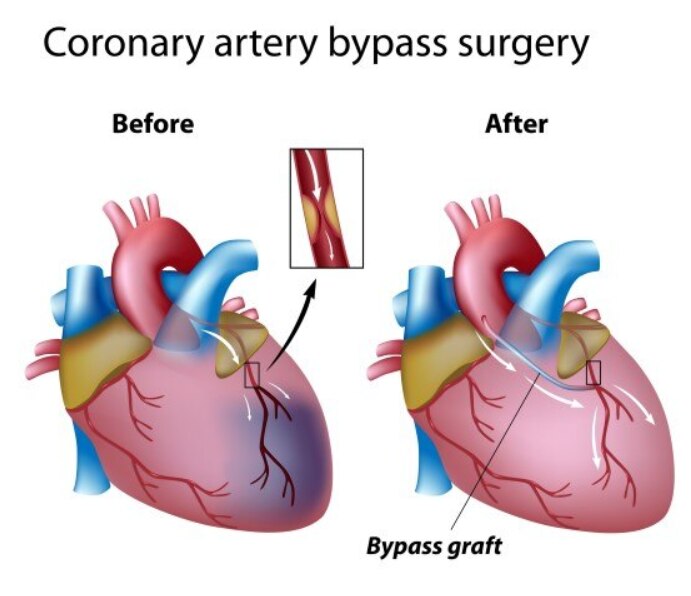
Each graft creates a new route beyond the narrowed coronary segment; the blockage stays in place. The surgeon attaches the graft’s small end to the coronary artery past the obstruction, then connects its other end to oxygen-rich blood.
An internal mammary artery remains connected to its chest artery, while a radial-artery or saphenous-vein graft is usually connected to the aorta. One graft serves one target; several blockages require several grafts.
| Approach | What happens | Main difference |
|---|---|---|
| On-pump CABG | A heart-lung machine circulates and oxygenates your blood while cardioplegia temporarily stops the heart. | A still, bloodless field helps the surgeon make precise attachments. |
| Off-pump CABG | The surgeon operates on the beating heart using a stabilising device. | It avoids the machine but demands specialised technique and is not suitable for every coronary pattern or patient. |
The choice depends on your coronary anatomy, overall condition and the surgeon’s expertise. The cardiac bypass procedure is therefore tailored rather than selected by preference alone. The bypass surgery steps in Nashik or elsewhere follow the same principle: connect each graft past the blockage and restore flow from its source.
Ask how many grafts are planned, which vessels will supply them, and why on-pump or off-pump surgery fits your angiogram.
How are the chest and graft-collection wounds closed?
The breastbone is brought back together with strong stainless-steel wires after the grafts are completed. The wires usually remain in place permanently, while the chest muscles and skin are closed with stitches, staples or surgical adhesive.
- Chest drains are placed through small openings below the main incision. They remove blood and fluid while the chest heals, then are taken out when drainage falls to a safe level. Removal can feel sharp but is brief.
- Temporary pacing wires are attached to the heart and brought out through the skin. They allow the team to correct a slow or abnormal rhythm after surgery and are removed when they are no longer needed.
- A leg incision used to collect a saphenous vein is closed and covered with a dressing. Report increasing swelling, redness, drainage, numbness or worsening pain, because the collection site can develop infection or delayed healing.
- A radial-artery harvest wound on the forearm is closed similarly. The team checks hand warmth, colour, sensation and pulse before and after harvesting.
What happens in intensive care, and when do normal activities resume?
You wake in intensive care with continuous ECG and blood-pressure monitoring, chest drains, a urinary catheter, intravenous lines and oxygen equipment. The breathing tube is removed after you are awake, breathing adequately and stable; a sore throat, confusion, shivering or patchy memories are common. If bleeding, lung function or circulation remains unstable, ventilation continues longer.
A realistic early timeline is:
- Ventilator removal: about 4–12 hours after surgery; overnight ventilation is possible.
- Sitting and walking: sit out of bed within 12–24 hours, then take assisted steps during the next one to two days.
- Eating: start with sips and light food after extubation once you are alert and swallowing safely; appetite often returns gradually.
- Showering: take a supervised shower around postoperative day 2 or 3 if the drains and wounds are suitable. Do not soak the chest or leg wound.
- Discharge: many uncomplicated cases leave hospital about 4–7 days after surgery.
Going home does not mean normal activity has returned. Short walks and basic self-care increase over the first weeks, while lifting, pushing and pulling are restricted until the breastbone heals, often 6–8 weeks. Driving commonly waits 4–6 weeks, subject to the surgeon’s advice.
Full stamina can take 6–12 weeks, and cardiac rehabilitation helps you rebuild it safely.
What should you ask when comparing a bypass hospital in Nashik?
Choose a bypass surgery hospital in Nashik by verifying its backup systems, not its package price. Ask these specific questions:
| Question | What a clear answer should cover |
|---|---|
| Is cardiac support available 24/7? | Cardiac anaesthesia, intensive care, ventilators, dialysis, laboratory and an on-site blood bank |
| What happens if bleeding continues? | Emergency re-exploration capability and a named escalation team |
| How will my operation be chosen? | Why bypass is preferable to angioplasty with a stent or medical treatment, which grafts suit you, and whether on-pump or off-pump surgery is planned |
| What risks apply to me? | Kidney injury, infection, stroke, rhythm problems, graft-harvest wound infection, numbness, swelling and delayed healing |
| Who follows me afterward? | Wound review, medication instructions, warning signs, cardiology appointments and supervised cardiac rehabilitation |
Ask the surgeon to review your angiogram, echocardiogram, kidney tests and medicines that increase bleeding. Dr Sheetalkumar Hiran at Nine Pearl Hospital can help explain whether catheter treatment or surgery fits your anatomy, but obtain the operating surgeon’s plan directly.
New chest pressure, breathlessness, fainting, sweating or pain spreading to your arm, jaw or back requires emergency assessment, not elective hospital comparisons.
Related product
 | Bypass Surgery Coronary artery bypass surgery Coronary artery bypass surgery, also known as coronary artery bypass graft (CABG, pronounced “cabbage”) surgery, and... |
Frequently asked questions
What happens before you enter the operating theatre?
The team reviews why bypass is needed, examines your angiogram and checks your ECG, echocardiogram, chest imaging, kidney function, blood count, blood group and clotting results. You also receive instructions about fasting, medicines, consent and preparation for anaesthesia.
What happens after anaesthesia begins?
An anaesthetist gives general anaesthesia and places monitoring lines and breathing support. The surgical team prepares the chest and collects the vessel that will become the graft while monitoring blood pressure, oxygen levels and heart function.
How are grafts attached, and when is a heart-lung machine used?
The surgeon connects each graft beyond the narrowed coronary artery so blood can flow around the blockage. A heart-lung machine is used when the operation is performed with the heart stopped; selected operations use off-pump bypass while the heart continues beating.
How are the chest and graft-collection wounds closed?
After checking blood flow and controlling bleeding, the surgeon closes the breastbone with strong wires and closes the skin with sutures, staples or surgical adhesive. The graft-collection wound is closed separately, and drains remain temporarily to remove blood and fluid.
What happens in intensive care, and when do normal activities resume?
You go to intensive care for breathing support, heart rhythm, blood pressure, bleeding and urine monitoring. Staff remove tubes as you stabilise, then help you sit, stand and walk. Recovery progresses through wound care, breathing exercises and cardiac rehabilitation, with driving, lifting and work resumed only after your surgical team clears them.