

Aching, heaviness, swelling, itching, skin changes and night cramps can signal venous disease rather than a cosmetic issue. You will be able to separate routine specialist symptoms from emergencies, understand what testing involves and compare local clinicians with clearer questions.
Key takeaways
- Seek emergency care for sudden one-sided swelling, chest pain, or breathlessness.
- Book a specialist visit when leg symptoms worsen with standing or disrupt sleep.
- A duplex scan maps blood flow and checks for faulty vein valves.
- Compare specialists by vascular expertise, scan quality, treatment options, and follow-up care.
Which vein symptoms need a specialist appointment, and which need emergency care?
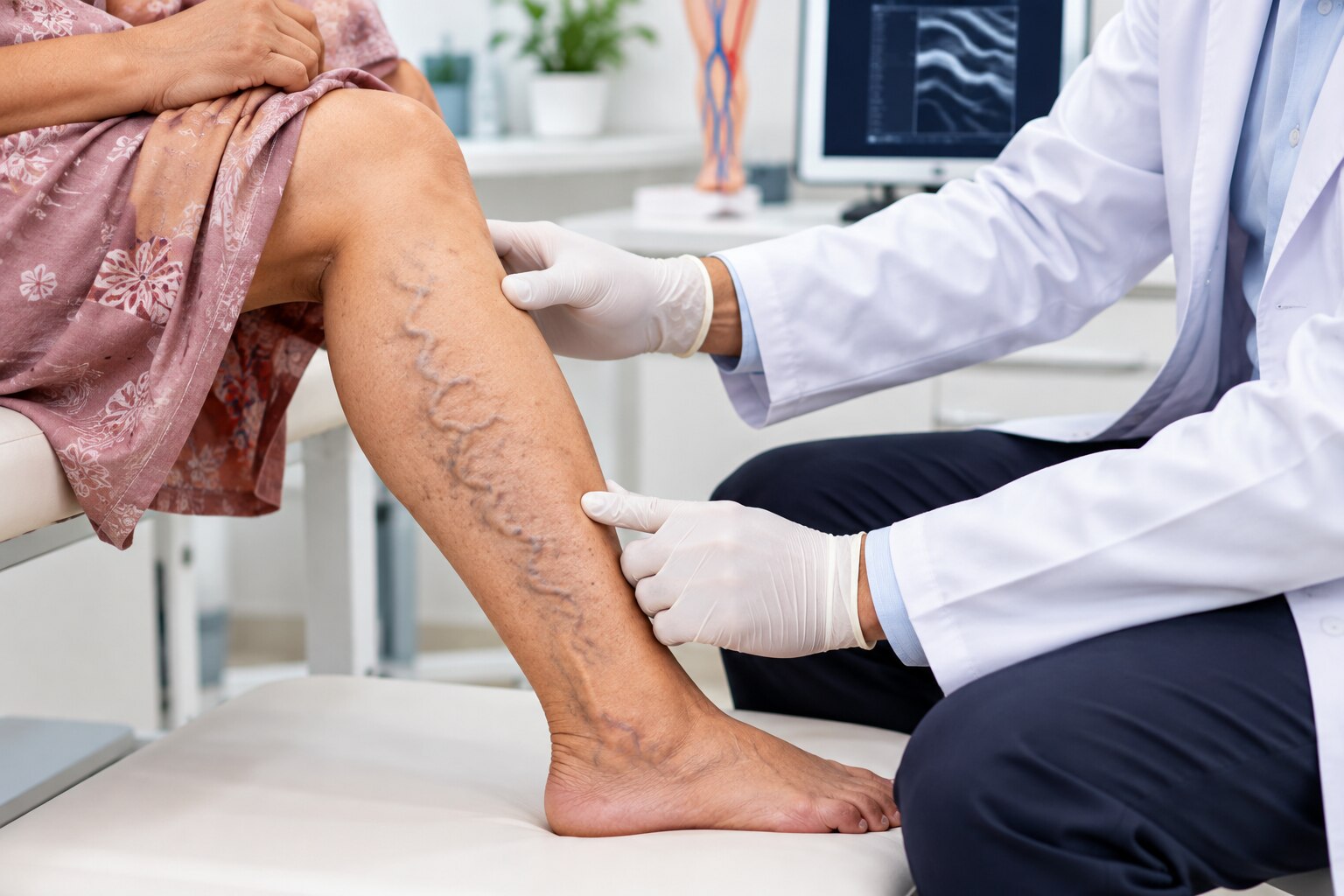
Aching, heaviness, swelling, itching or night cramps justify booking a varicose vein specialist in Nashik when they worsen after standing or improve after leg elevation. Seek assessment even if the veins are not prominent; symptoms can reflect venous disease beneath the skin.
| Situation | Decision | What to do |
|---|---|---|
| Mild, stable symptoms with no skin change | Monitor briefly | Elevate your legs, avoid prolonged standing and arrange review if symptoms persist, worsen or disrupt sleep. |
| Brown staining, eczema, thickened skin, an ulcer, recurrent inflammation, or a hard, tender vein | Book promptly | See a painful varicose veins doctor. These signs indicate skin damage, superficial thrombophlebitis or advanced venous disease. |
| Sudden one-sided swelling, warmth, redness or severe leg pain | Seek urgent medical care | Do not wait for a routine vein-clinic appointment; urgent assessment is needed for possible deep-vein thrombosis. |
| Chest pain, sudden breathlessness, coughing blood, fainting or a rapid heartbeat | Seek emergency care now | These symptoms with leg symptoms can indicate a pulmonary embolism. |
Bleeding from a varicose vein also needs prompt review. Lie down, raise the affected leg above heart level and apply firm, direct pressure with clean cloth or gauze. If bleeding continues, seek emergency care; do not release pressure repeatedly to check it.
Pregnancy can enlarge veins, but severe one-sided swelling, chest symptoms or bleeding still require urgent assessment.
How can you tell varicose-vein symptoms from other leg problems?
Gradual aching, heaviness, itching or swelling that worsens after standing and settles with leg elevation fits superficial venous disease more than many other leg problems. Evening swelling and visible veins support this pattern; sudden change needs a different assessment.
| Condition | Clues that distinguish it | What to do |
|---|---|---|
| Superficial venous disease | Gradual ache, heaviness, itching or evening swelling; symptoms improve with elevation | Arrange assessment with a leg vein specialist in Nashik |
| Deep-vein thrombosis | Sudden one-sided swelling, pain, warmth or tenderness | Seek urgent medical care, especially if breathlessness or chest pain occurs |
| Peripheral arterial disease | Calf pain brought on by walking, cool feet, weak pulses or wounds that heal poorly | Request arterial assessment |
| Cellulitis | Spreading redness, warmth, tenderness and fever | Obtain prompt medical treatment |
| Lymphedema | Persistent swelling with skin thickening, often involving the foot | Arrange assessment for lymphatic and venous causes |
| General leg oedema | Swelling affecting both legs, often linked to a broader medical cause | Seek clinical review |
| Muscle, tendon or joint problem | Pain follows a movement, strain, exercise or injury | Assessment should target the injured structure |
A new painful, tender, cord-like vein can indicate superficial thrombophlebitis, not ordinary varicose-vein discomfort. A clinician must check whether the clot extends toward the deep venous system, so do not massage it or assume it is harmless.
What happens at the first consultation and during a duplex scan?
A proper first consultation should establish clot risk, examine both legs and map the veins before anyone recommends treatment. A varicose vein doctor in Nashik should ask about:
- When symptoms start, whether standing worsens them, and whether elevation helps
- Previous deep-vein thrombosis (DVT) or pulmonary embolism
- Recent surgery, long travel, cancer or reduced mobility
- Family history, hormone therapy, pregnancy or postpartum status
- Medicines, especially anticoagulants, antiplatelet drugs and anything affecting bleeding
The clinician should examine both legs while you are standing, inspect skin colour, eczema and ulcers, feel tender areas or hard veins, and assess foot pulses. A physical examination alone cannot show which veins have reflux or obstruction.
| Assessment | What happens | What it clarifies |
|---|---|---|
| History | Clot risks, medicines, bleeding risk, symptoms and pregnancy status are reviewed | Urgency and treatment safety |
| Standing examination | Both legs, skin, ulcers, tender areas and pulses are checked | Skin complications, arterial concerns and painful veins |
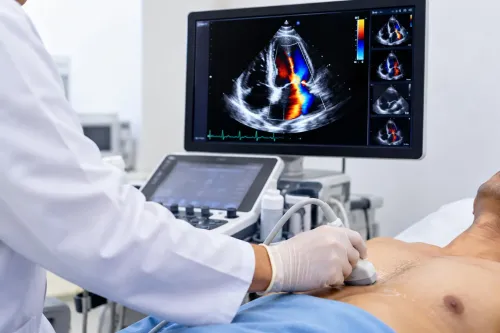
| Duplex or Doppler ultrasound | Gel is applied while a probe tracks the veins; you may change position or briefly strain | Vein anatomy, blood flow, reflux, obstruction and possible thrombosis |
The scan usually needs no fasting or special preparation and commonly takes 30 to 60 minutes. Confirm the clinic’s appointment time, because some centres allow extra time for both legs or a detailed report.
When are self-care and compression no longer enough?
Prominent veins alone do not decide treatment: persistent symptoms or skin complications, alongside duplex findings, determine whether you need observation, compression, sclerotherapy, ablation or surgery. A varicose vein specialist in Nashik should review the scan rather than judge severity by appearance.
Compression stockings can ease aching and swelling, but they do not correct venous reflux. Ask for arterial circulation assessment before strong compression if foot pulses are reduced or peripheral arterial disease is possible.
Arrange specialist-led planning for:
- Persistent pain, significant swelling or recurrent thrombophlebitis
- Brown staining, eczema, thickened skin or ulceration near the ankle
- Recurrent bleeding from a varicose vein
- A healed venous ulcer, because recurrence risk still needs management
If duplex ultrasound confirms truncal reflux and treatment is appropriate, radiofrequency ablation or endovenous laser treatment is usually considered when suitable. Ultrasound-guided foam sclerotherapy is an option when endothermal treatment is unsuitable; surgery is considered when these approaches are unsuitable. A painful varicose veins doctor can explain why one option fits your anatomy.
Observation remains reasonable when symptoms are mild, the skin is healthy and the scan shows no significant reflux requiring treatment. Pregnancy, limited mobility, previous vein procedures, bleeding risk and illnesses such as arterial disease affect timing and choice, so avoid indefinite self-treatment without review.
How should you compare vein specialists and local clinics in Nashik?
Choose the clinician by the venous problem you need assessed, not by the label “best” or “specialist.” A general physician is suitable for initial triage and referral; complex venous disease, ulcers or planned surgery need a vascular surgeon. An interventional cardiologist may provide endovascular expertise, but must demonstrate specific experience assessing venous reflux.
| Clinician | Appropriate role | What to verify |
|---|---|---|
| General physician | Initial triage and referral | Recognises DVT, bleeding and venous symptoms |
| Vascular surgeon | Complex disease, ulcers and surgery | Performs venous assessment and explains operative and non-operative options |
| Interventional cardiologist | Endovascular procedures | Personally assesses venous disease and arranges appropriate venous imaging |
Before booking a vein clinic in Nashik, ask:
- Do you personally examine for venous reflux, obstruction and thrombosis?
- Who arranges and reviews the duplex ultrasound: the treating clinician, a radiologist or another specialist?
- Does the clinic have hospital access if DVT, severe bleeding or an ulcer needs urgent treatment?
- What emergency support is available outside the appointment?
- What written follow-up records the scan findings, treatment plan and review date?
An ECG, echocardiogram or cardiac stress test does not diagnose leg-vein reflux. Before attending Dr Sheetalkumar Hiran at Nine Pearl Hospital, verify access to duplex imaging, the clinician’s venous assessment experience and the referral pathway to vascular surgery when findings require it.
Check qualifications through the hospital or a professional registry, not a promotional search result.
Related product
 | usually announce themselves as bulging, bluish cords running just beneath the surface of your skin . They almost always affect legs and feet. View product → |
Frequently asked questions
Which varicose-vein symptoms need a specialist appointment?
Book an assessment for aching, heaviness, swelling, itching, night cramps, skin changes, or symptoms that worsen after standing and improve with leg elevation. Visible veins are not required.
When do leg vein symptoms need emergency care?
Seek urgent medical care for sudden one-sided leg swelling, severe pain, redness or warmth, a coughing episode with blood, chest pain, or unexplained breathlessness.
How can you tell varicose-vein symptoms from other leg problems?
Venous symptoms often worsen during prolonged standing and ease with elevation. Sudden swelling, marked warmth, severe pain, numbness, weakness, or breathlessness needs prompt assessment because another condition may be responsible.
What happens during a duplex scan?
You lie or stand while an ultrasound probe examines the leg veins. The scan shows blood-flow direction, clots, narrowed sections, and whether vein valves allow backward flow.
When are self-care and compression no longer enough?
Arrange a specialist review when symptoms persist despite walking, leg elevation, weight management, or correctly fitted compression; when swelling increases; or when skin becomes discoloured, thickened, itchy, or ulcerated.