


Finding coronary bypass care in Nashik requires more than locating a cardiology clinic or cath lab. You will need to verify the hospital’s cardiac-surgery infrastructure, assess the surgeon and Heart Team, and understand why CABG is being recommended over angioplasty or medication.
Key takeaways
- A cath lab alone does not prove a hospital performs CABG.
- Ask whether the hospital has an operating cardiac-surgery service and ICU.
- Check the surgeon’s CABG experience, team structure, and emergency backup.
- Compare CABG with stents and medication using your angiogram and heart risk profile.
Which Nashik hospitals actually perform CABG?
A Nashik hospital performs CABG only when it has an operating cardiac-surgery service, not merely cardiology testing. A cath lab proves that angioplasty and coronary angiography are available; it does not prove that the hospital performs bypass surgery. This distinction matters when searching for “coronary bypass surgery in Nashik” or “bypass surgery near me.”
Before booking, ask the appointment desk:
- Is CABG performed on-site, at this exact hospital location?
- Does the hospital have a cardiac-surgery department, cardiac operating theatre and resident cardiothoracic surgery team?
- Does postoperative care remain in the same facility, including the cardiac intensive-care unit?
- If surgery is referred elsewhere, what is the receiving hospital, surgeon’s name and referral pathway?
- Which number handles urgent cardiac symptoms, and where is the emergency entrance?
| Service | What it confirms | What it does not confirm |
|---|---|---|
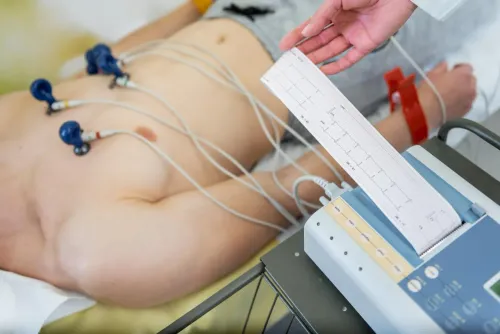
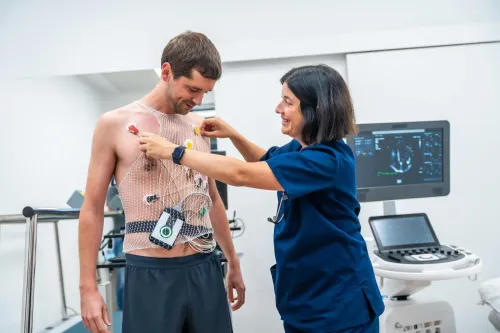
| Cardiology consultation, ECG, echocardiogram or stress test | Assessment and non-invasive diagnosis | Availability of bypass surgery |
| CT coronary angiography or coronary angiography | Visualisation of coronary blockages | A surgical team or cardiac operating theatre |
| Cath lab | Capability for angioplasty and catheter procedures | CABG, cardiothoracic surgery or postoperative cardiac ICU care |
| Cardiac-surgery department with theatre and ICU | On-site capability to evaluate and perform CABG | That every patient needs bypass surgery |
Stable patients can schedule an angiogram review and ask about referral options. Active chest pain, breathlessness, sweating or suspected heart attack requires emergency services, not online comparison.
How to verify a hospital is equipped for open-heart surgery
A hospital is equipped for open-heart surgery only when the full bypass pathway is available on-site, not merely cardiology consultations, a cath lab or non-invasive testing.
1. Call the hospital and ask whether a resident cardiothoracic surgery team performs CABG on-site, with cardiac anaesthesia and a perfusionist available whenever cardiopulmonary bypass uses a heart-lung machine.
2. Confirm that it has a dedicated cardiac operating theatre, a cardiac intensive-care unit staffed continuously, and ventilators for prolonged mechanical ventilation.
3. Ask whether blood components can be supplied urgently from an on-site blood bank or a documented immediate-access service. Delays matter when bleeding requires reoperation.
4. Ask directly: “Does this hospital manage reoperation for bleeding, dangerous rhythm problems, kidney injury, respiratory failure and dialysis without an unplanned transfer?”
5. Verify that postoperative chest imaging, echocardiography, laboratory testing and specialist support are available in the same facility. A patient should not depend on finding another hospital after surgery.
6. During an in-person visit, identify the cardiac ICU, operating-theatre location, emergency department, blood-bank contact and after-hours cardiac-surgery number.
Hospital size, phrases such as “advanced cardiac care” and a successful bypass surgery near me search do not prove CABG capability. For a bypass surgery hospital in Nashik, request clear answers to these questions before booking a consultation, and ask where surgery and postoperative ICU care will actually occur.
How to select a CABG surgeon and cardiac team
1. Choose a cabg surgeon in Nashik by asking for specialist cardiothoracic-surgery qualifications, such as MCh or DNB in Cardiothoracic and Vascular Surgery, years performing bypass operations and annual CABG volume. Ask about experience with left-main disease, diffuse or calcified blockages, weak heart pumping, repeat bypass surgery and combined procedures.
2. Check whether the surgeon participates in a Heart Team, not just a solo consultation. The team should include a clinical cardiologist, interventional cardiologist, cardiac anaesthetist, perfusionist, intensivist and rehabilitation staff. Ask whether these clinicians reviewed your angiogram together, because that assessment is more useful than an online directory or title alone.
3. Request risk-adjusted results and the exact time point used, such as during the operation, before discharge or within 30 days. Ask for operative mortality, stroke, kidney injury, reoperation for bleeding, wound infection, ICU duration and readmission rates; then ask whether the figures cover isolated CABG, emergency operations or combined procedures.
Raw success rates are not comparable when case mixes differ. Confirm who will perform the operation, who provides ICU care and who manages bleeding, rhythm, kidney or breathing complications.
When CABG is preferred over stents or medication
CABG is preferred when the angiogram shows extensive or difficult-to-treat coronary disease and the expected benefit outweighs open-surgery risk. Doctors assess the number, location and complexity of blockages alongside symptoms, diabetes, kidney function, left-ventricular pumping strength, age, frailty and overall operative risk.
CABG is commonly considered for significant left-main disease, three-vessel disease, complex diffuse narrowing, and selected patients with diabetes or reduced ventricular function. A focal blockage that a catheter can reach safely may favour angioplasty with stenting. Medication and risk-factor control may be appropriate when symptoms and coronary anatomy do not justify an intervention.
CABG is less suitable when the coronary targets are too small, extensively diseased or otherwise unable to accept useful grafts. Severe unrelated illness can also make open surgery disproportionately dangerous.
For a stable patient considering coronary bypass surgery in Nashik, ask for these answers after the angiogram review:
- Which arteries are blocked, and where?
- How many grafts are proposed, and why is CABG preferred over stenting or medication?
- What alternatives remain, including angioplasty?
- How do diabetes, kidney function, heart-pumping strength, age and frailty change the recommendation?
- What is your estimated individual risk of death, stroke, kidney injury and other major complications?
Heart bypass treatment in Nashik is not the emergency pathway for every patient. Suspected heart attack requires urgent assessment; eligible STEMI patients are generally considered for primary PCI when it can be delivered within the recommended time. Do not delay emergency care to compare hospitals or search listings.
What to ask before booking bypass treatment in Nashik
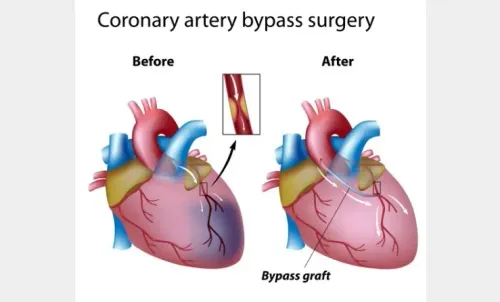
Before booking, ask the surgeon to describe the operation in plain terms: general anaesthesia, an opening through the breastbone, and grafts that route blood around blocked coronary arteries. Grafts may come from the internal mammary artery, radial artery or saphenous vein; the internal mammary artery is commonly connected to the left anterior descending artery.
Conventional CABG uses a heart-lung machine while the surgeon operates on a still heart. Off-pump CABG is performed on the beating heart. Neither is a universal quality ranking: coronary anatomy, graft targets, surgeon expertise and operative risk determine the suitable approach.
1. How many grafts are planned, which artery will receive each one, and why is each conduit proposed? Tell the team about previous arm procedures, poor leg veins, kidney disease and possible future dialysis access before they choose a radial artery or saphenous vein.
2. Where will the operation and ICU care occur? Confirm that the bypass surgery hospital in Nashik provides cardiac surgery, cardiac anaesthesia, perfusion support and postoperative care on-site, rather than arranging an unexpected transfer.
3. What medicines, ICU and hospital stay, wound care, graded activity, cardiac rehabilitation and follow-up should you expect? Ask how antiplatelet treatment, cholesterol lowering, blood-pressure and diabetes control, smoking cessation and long-term prevention will continue after discharge.
A consultation with Dr Sheetalkumar Hiran at Nine Pearl Hospital can help review reports and clarify whether an on-site or partner cardiac-surgery team is the next step for heart bypass treatment in Nashik.
Related product
 | Coronary artery bypass surgery Coronary artery bypass surgery, also known as coronary artery bypass graft (CABG, pronounced “cabbage”) surgery, and... View product → |
Frequently asked questions
Which Nashik hospitals actually perform CABG?
Look for hospitals with an operating cardiac-surgery service, cardiothoracic surgeons, a cardiac operating theatre, and postoperative cardiac ICU care. A hospital offering angiography or angioplasty may not perform CABG.
How can you verify that a hospital is equipped for open-heart surgery?
Ask whether it performs coronary artery bypass grafting on site and request details about the cardiac operating theatre, cardiopulmonary bypass equipment, cardiac ICU, blood-bank support, and emergency surgical backup.
How do you select a CABG surgeon and cardiac team in Nashik?
Ask about the surgeon’s CABG training, current operating role, experience with your anatomy and medical risks, who provides anaesthesia and ICU care, and how complications are handled.
When is CABG preferred over stents or medication?
CABG is considered when coronary disease is extensive, affects important vessels such as the left main artery, involves multiple vessels, or is difficult to treat effectively with stents. Your angiogram, symptoms, diabetes status, heart function, and surgical risk guide the decision.
What should you ask before booking bypass treatment in Nashik?
Ask which arteries require grafts, why CABG is recommended, which alternatives remain, the expected hospital stay, recovery restrictions, major risks, total estimated charges, and what follow-up and rehabilitation include.